A Night Walk Through Vienna with the Vintage I ART Filter
A night photo walk through Vienna as a real-world test of the Vintage I ART filter. Shot straight out of the camera, this article looks at night light, contrast, and atmosphere, and explains why ART filters may deserve a second look.
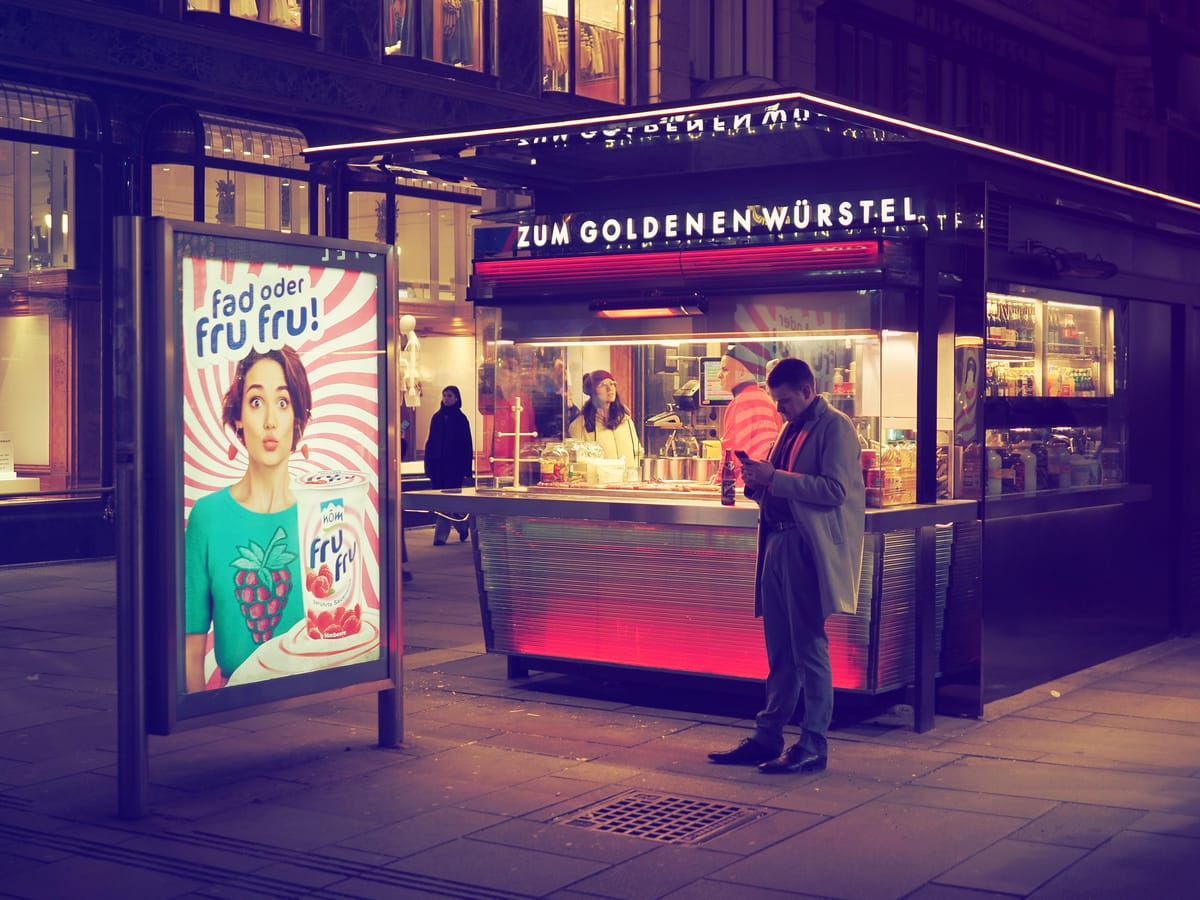
ART filters on Olympus and OM System cameras are easy to dismiss. They sit deep in the menu, often associated with experiments, presets, or something you try once and never return to. For a long time, that was my attitude as well.
The Vintage I ART filter changed that. Not because it is spectacular or dramatic, but because it quietly reshapes the way night scenes feel. I decided to test it in the most natural way possible for me. A simple evening photo walk through Vienna. No tripod. No post-processing beyond an occasional crop.
ART filters are often overlooked for the wrong reasons
ART filters suffer from a perception problem. Because they are available directly in the camera, they are often considered less serious than images processed later on a computer. But that assumption misses something important.
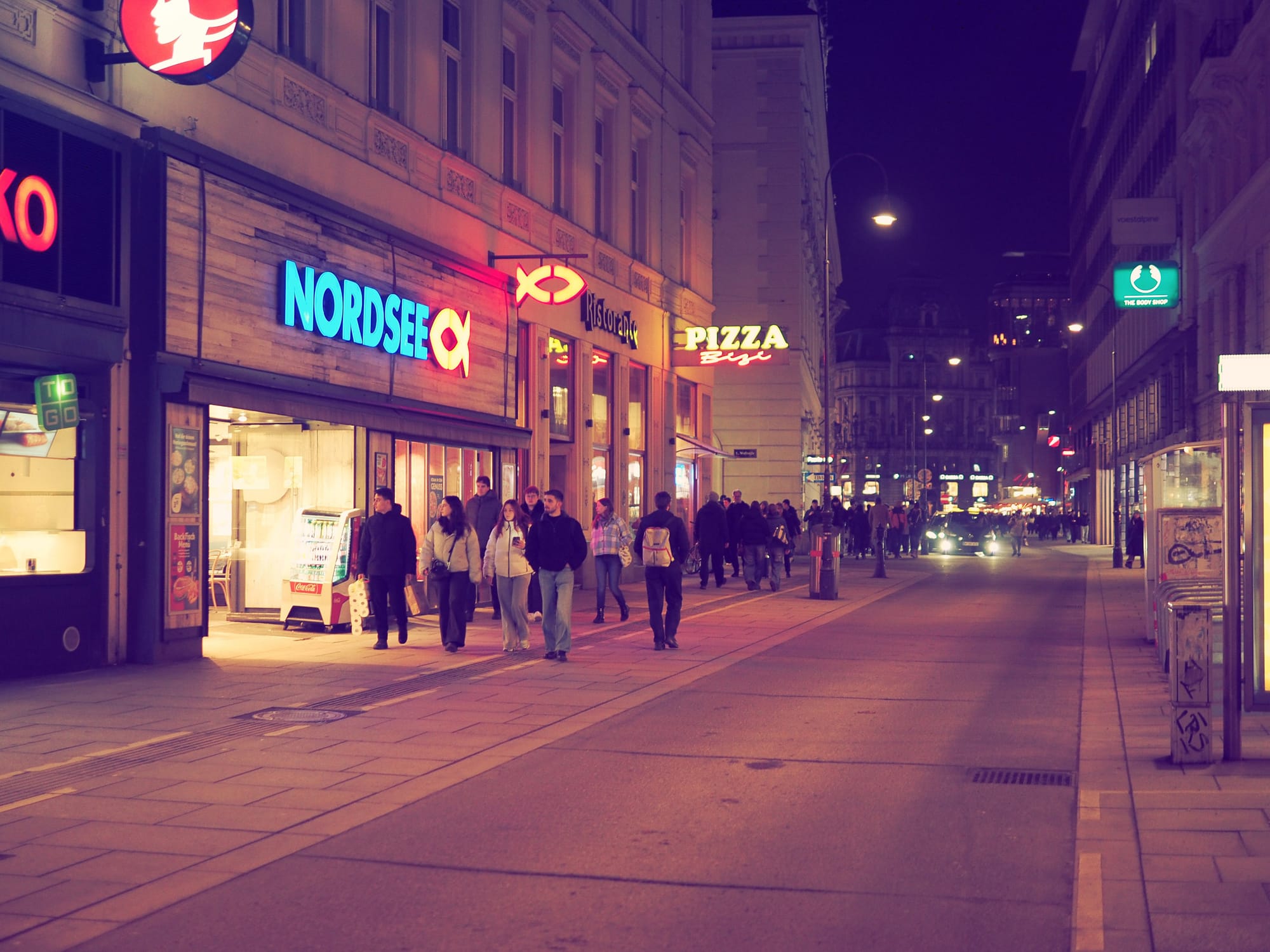
An ART filter works at the moment of exposure. It forces you to commit. You are no longer thinking about what the image could become later. You are thinking about what the light is doing right now.
In night photography, that shift matters. Vintage I is not about adding a look. It is about removing harshness and letting the atmosphere take the lead.
Camera Setup and Shooting Approach
For this walk, the Vintage I ART filter was active for the entire session. Instead of treating it as an experiment, I treated it as the final image.
All photographs were taken with the Olympus OM-D E-M10 Mark IV, paired with the Leica DG Summilux 25mm f/1.4. The setup was deliberately simple and remained consistent throughout the walk.
My shooting settings were straightforward:
- Aperture was almost always set to f1.4
- Exposure compensation stayed between −0.7 and −1.3 EV
- ISO was usually 200 or 400, occasionally 800 when the light dropped further
- White balance was left on Auto
All images were captured as JPEG+RAW, specifically LSF + RAW (LSF = Large Super Fine). The JPEG files represent the finished result straight out of the camera, exactly as shown in this article. The RAW files were kept only as a safety net and for future reference, not for post-processing or correction.
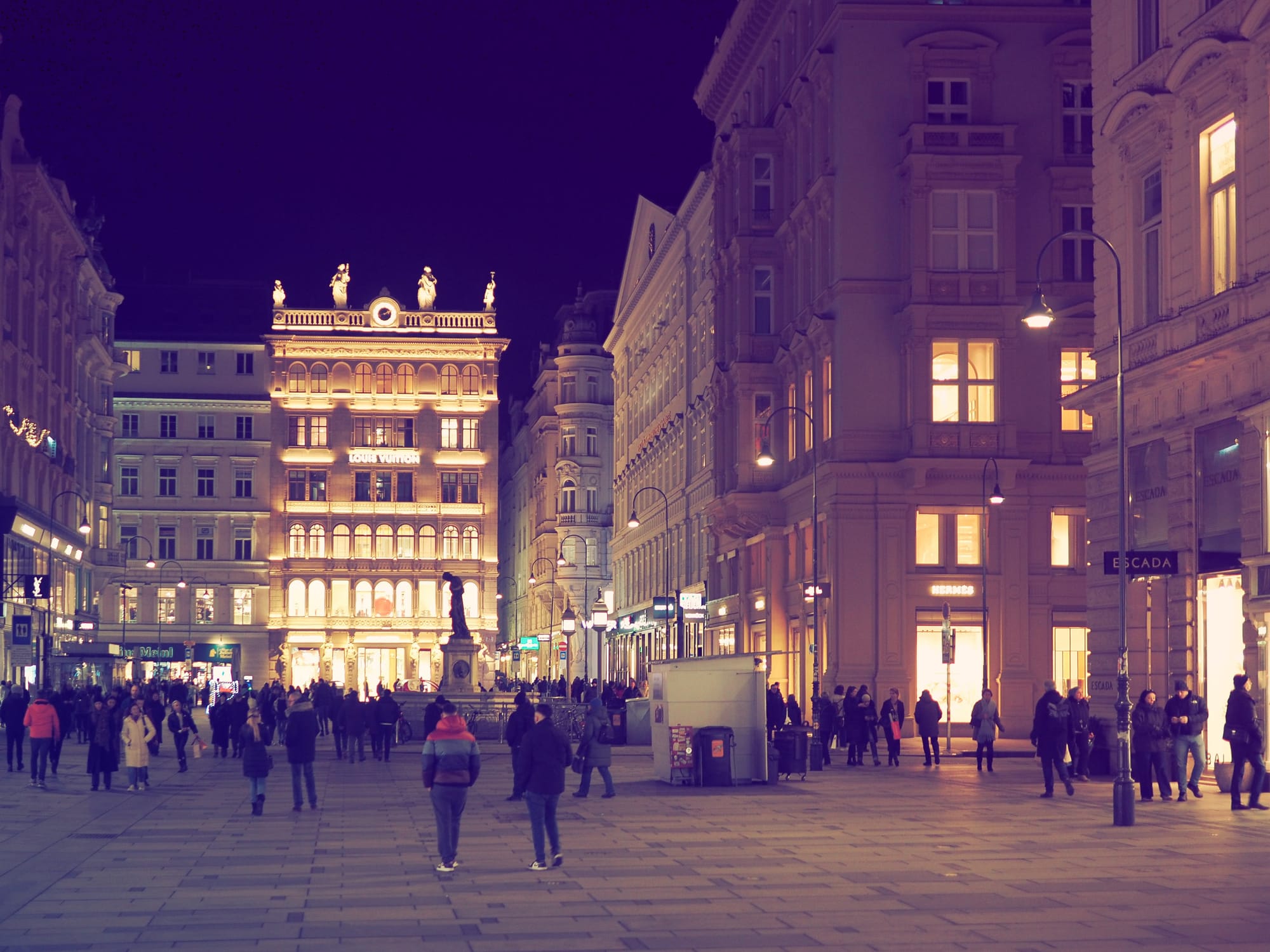
Although OM System cameras offer a dedicated ART Filter position on the mode dial, I chose a different approach. The camera was set to A mode, with the Vintage I ART filter enabled via the Super Control Panel. This keeps full control over exposure while still benefiting from the ART filter rendering, and makes it easier to fine-tune exposure compensation on the fly.
There was no intention to refine or reinterpret the images later. What you see here is the result of decisions made at the moment of exposure.
Walking through Vienna after dark
I followed a simple evening route through central Vienna, focusing on how different types of light behave at night rather than on specific landmarks.
I started around Wien Mitte, where strong artificial light cuts through otherwise dark surroundings. It was a good starting point to see how the Vintage I ART filter handles bright highlights early on.
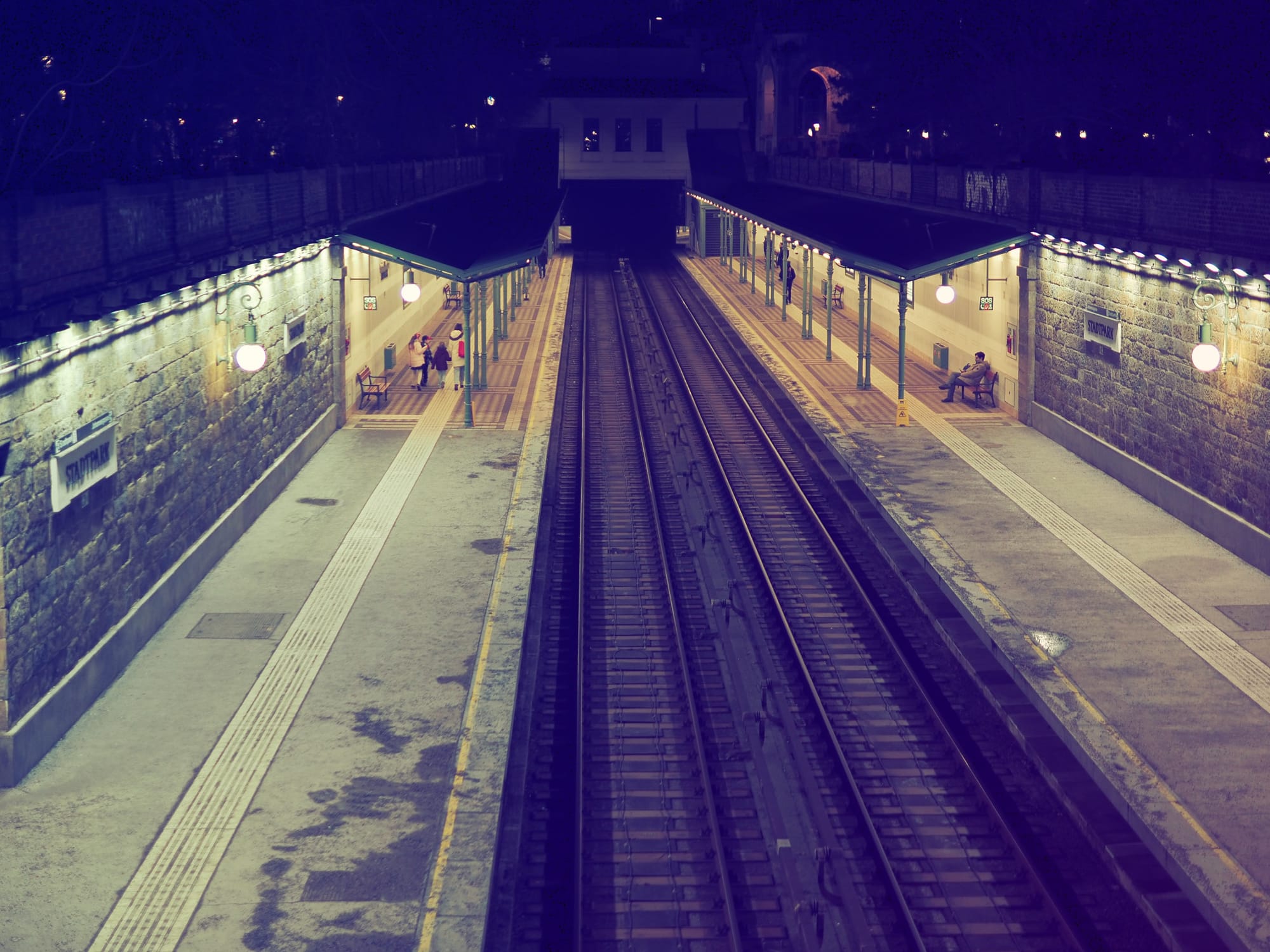
From there, I moved toward Stadtpark, where the light quickly became softer and more diffuse, with longer shadows and calmer transitions.
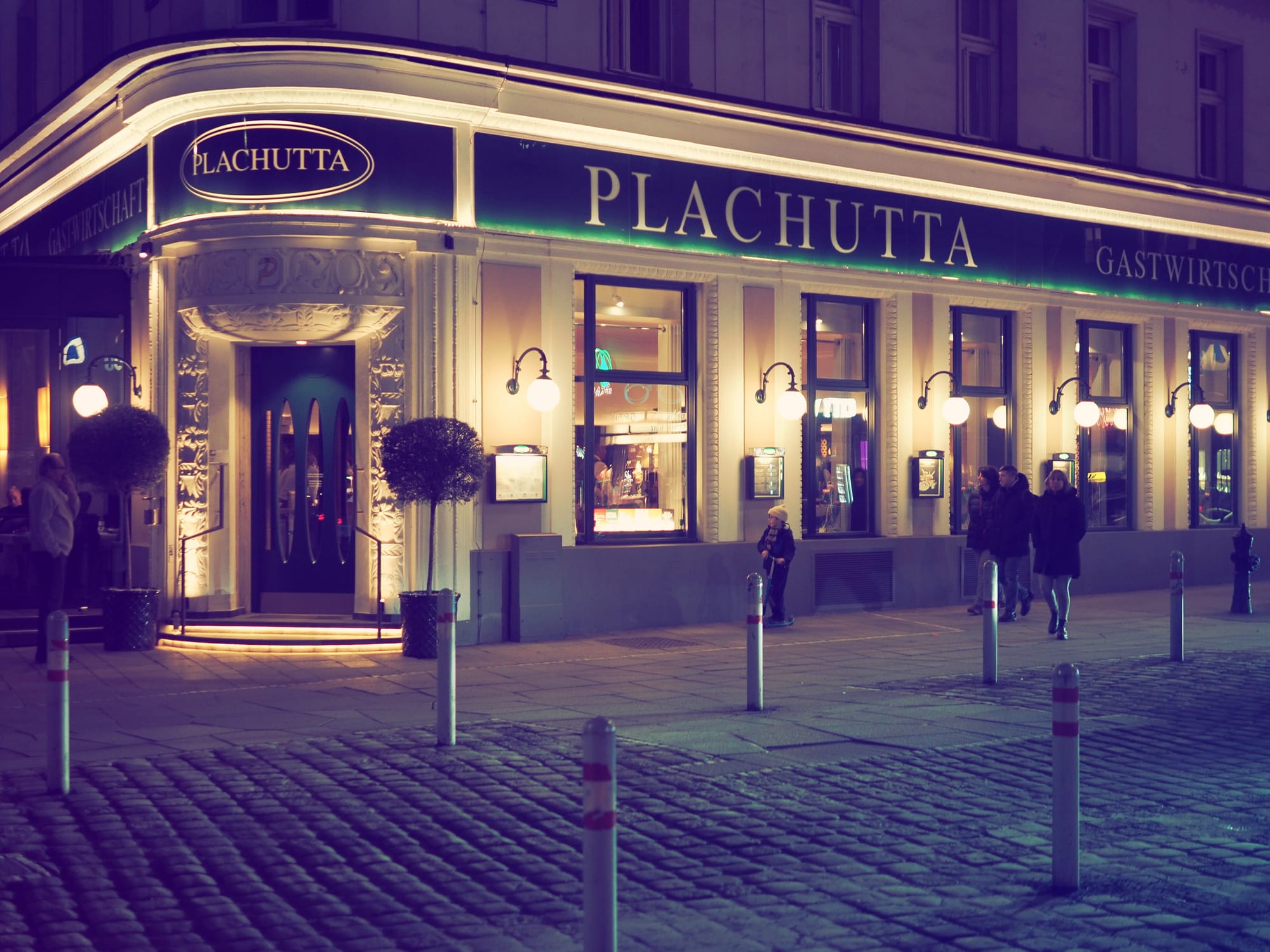
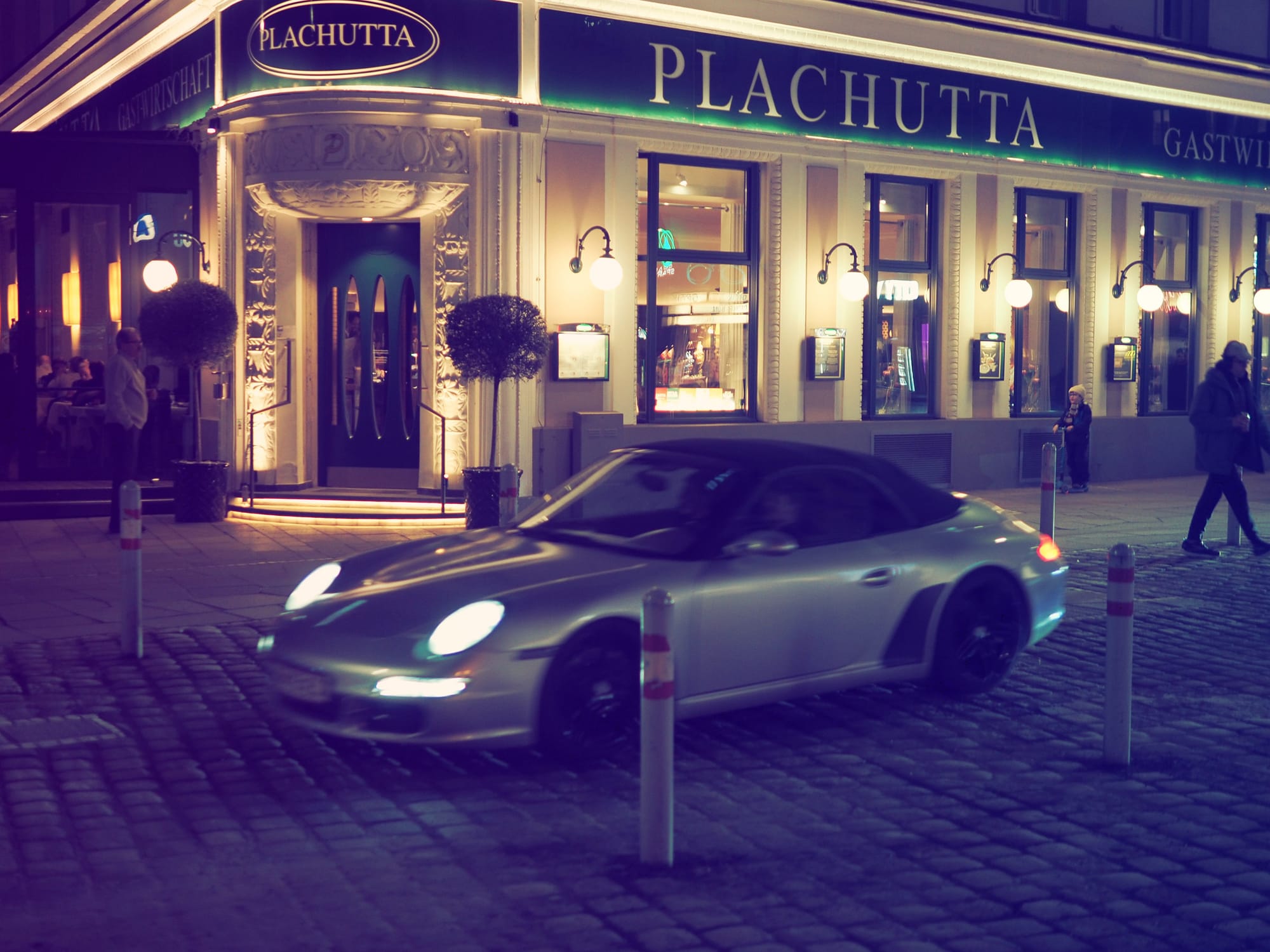
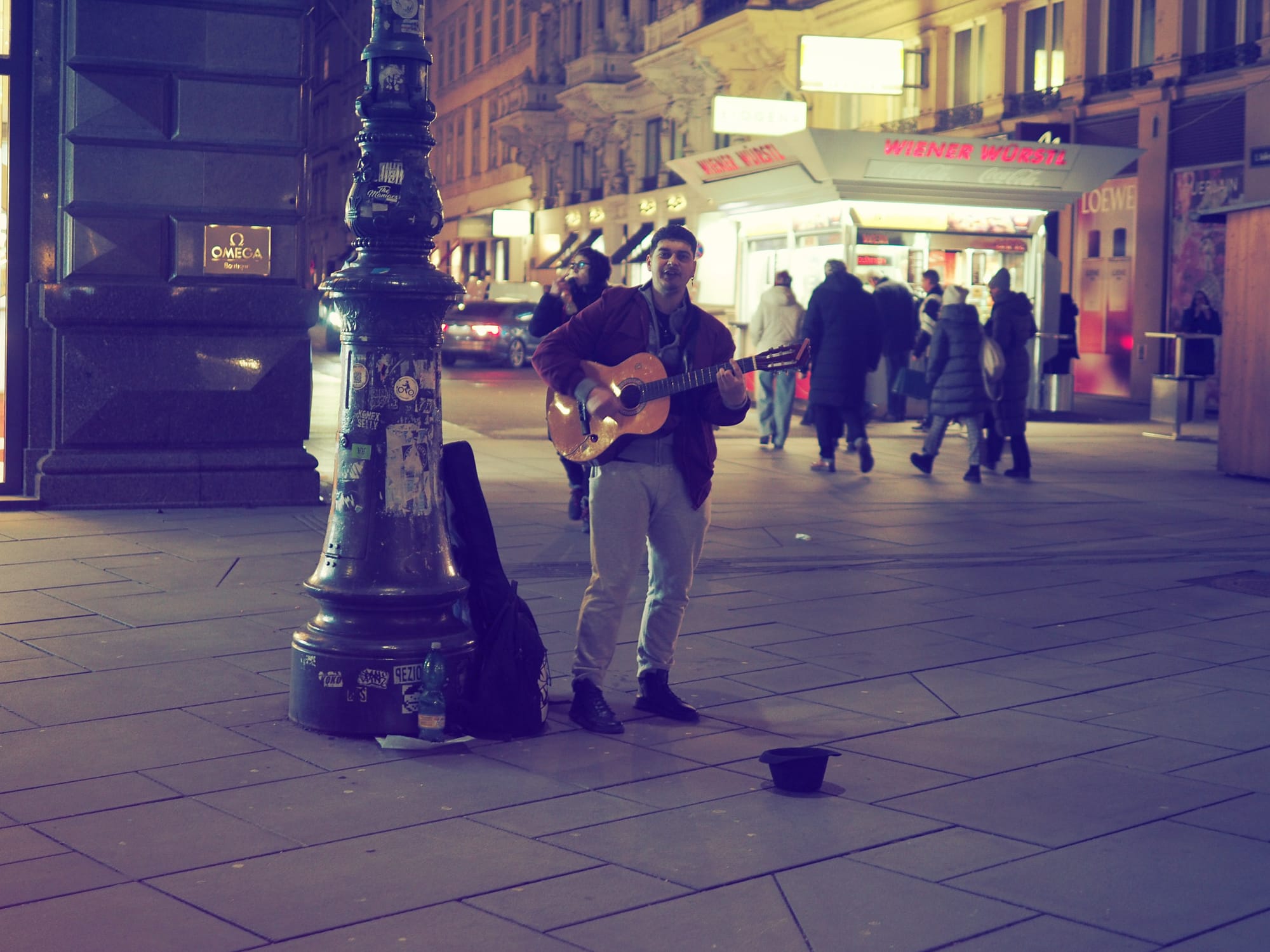
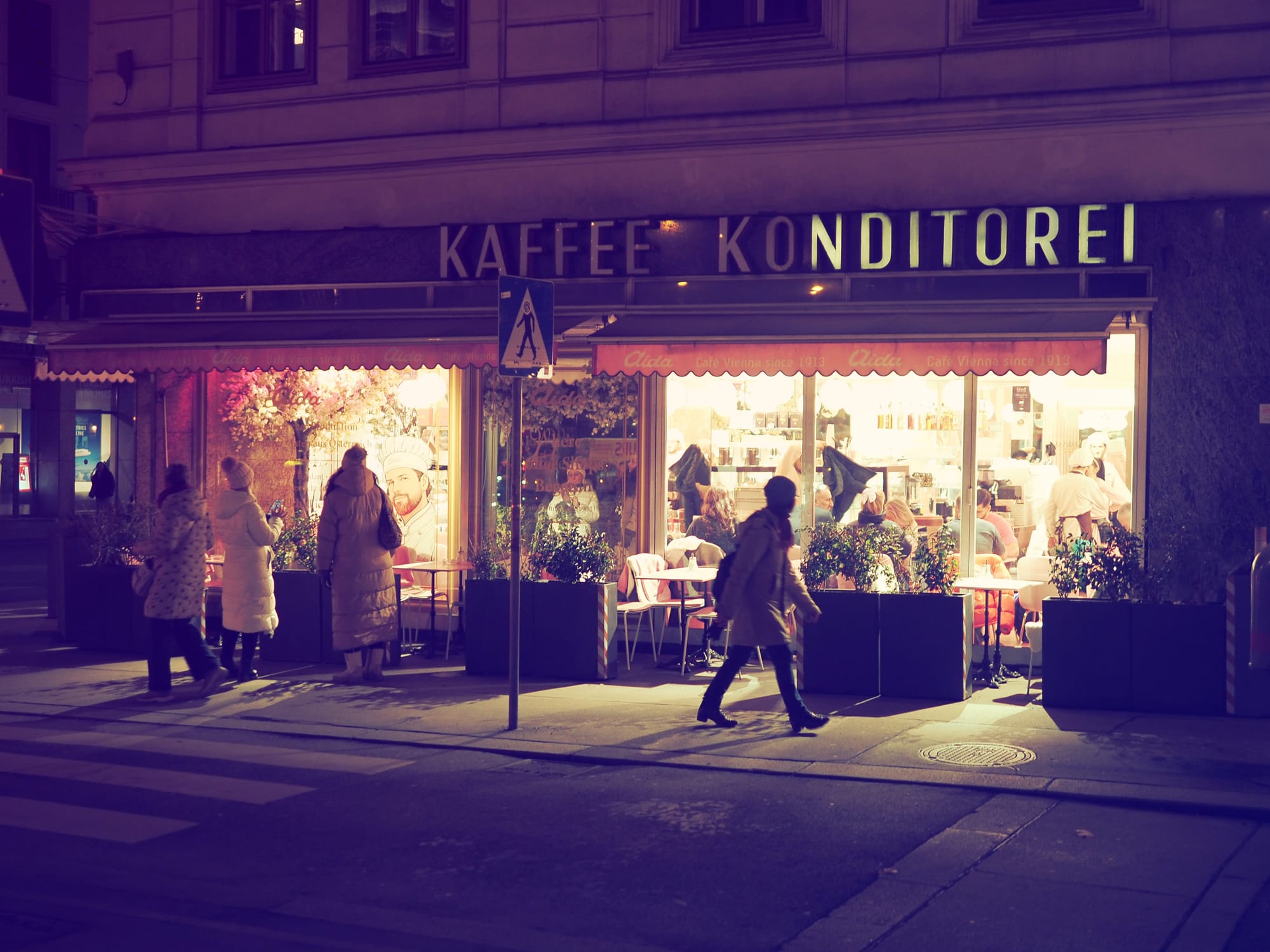
At Stephansplatz, the scene shifted again. Bright shop windows and illuminated facades mixed with dark stone surfaces, creating higher contrast situations that clearly showed how the filter keeps the image balanced.
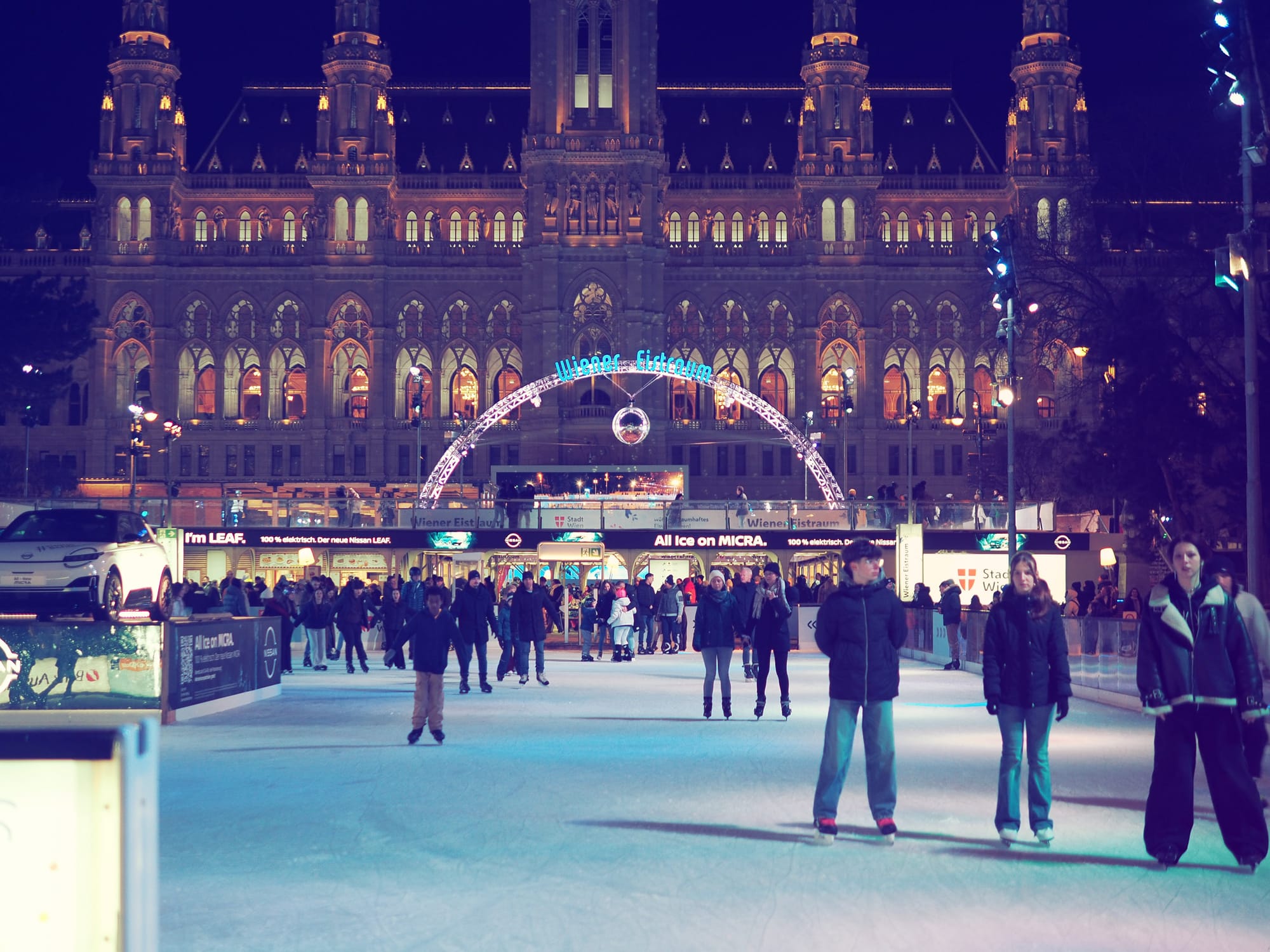
Around Rathausplatz, the illuminated ice rink introduced strong highlights, reflections, and constant movement, which required careful exposure choices.
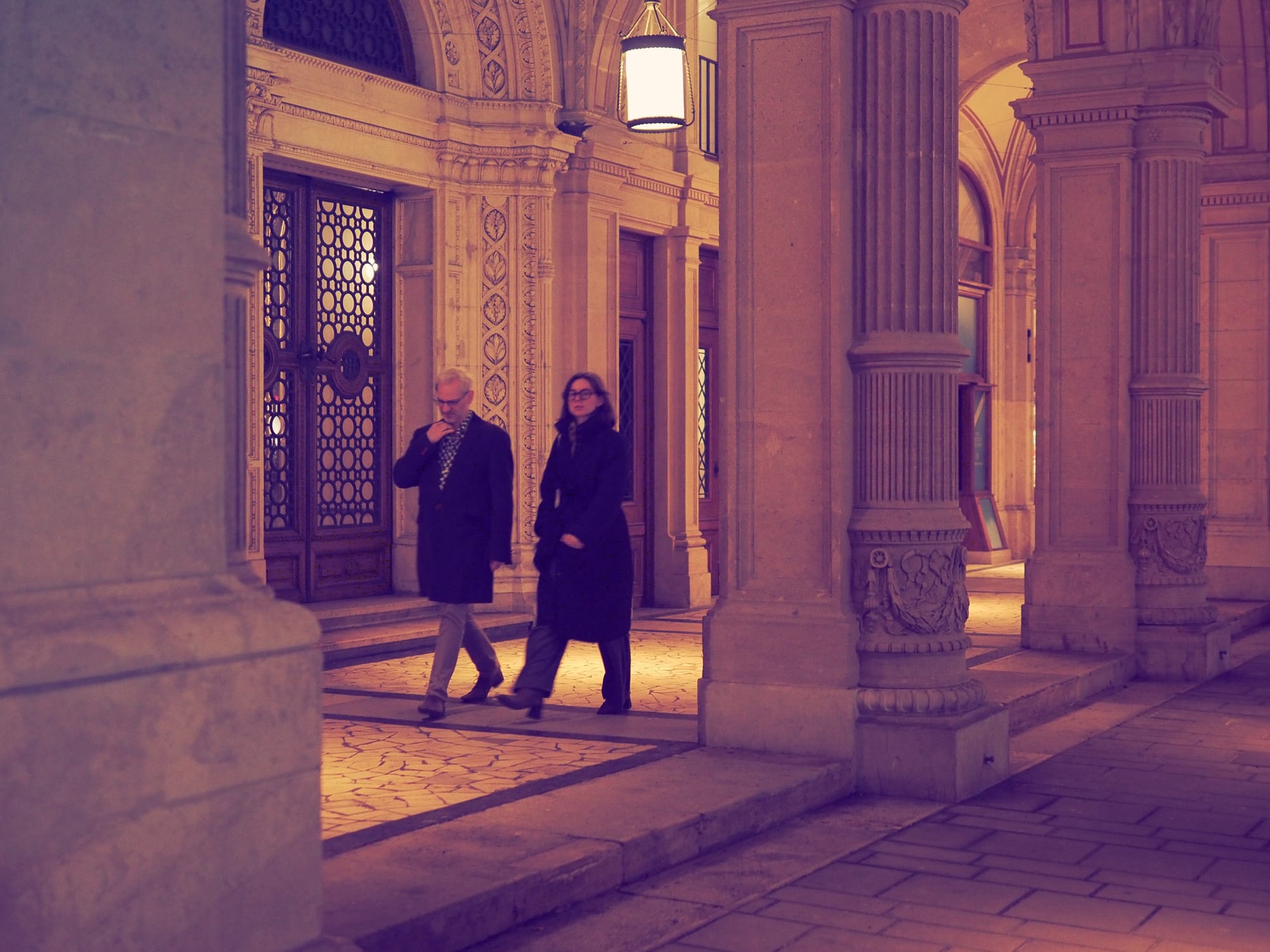
I finished the walk around Wiener Staatsoper and Karlsplatz, where the pace slowed again, and the light became less structured.
This route allowed me to use the Vintage I ART filter across a range of real night scenes within a single walk.
The atmosphere the Vintage I ART filter creates
Vintage I ART filter does not try to impress. It lowers contrast, softens highlights, and allows colors to exist without being pushed forward. Whites feel calmer, while shadows are left deep and unresolved.
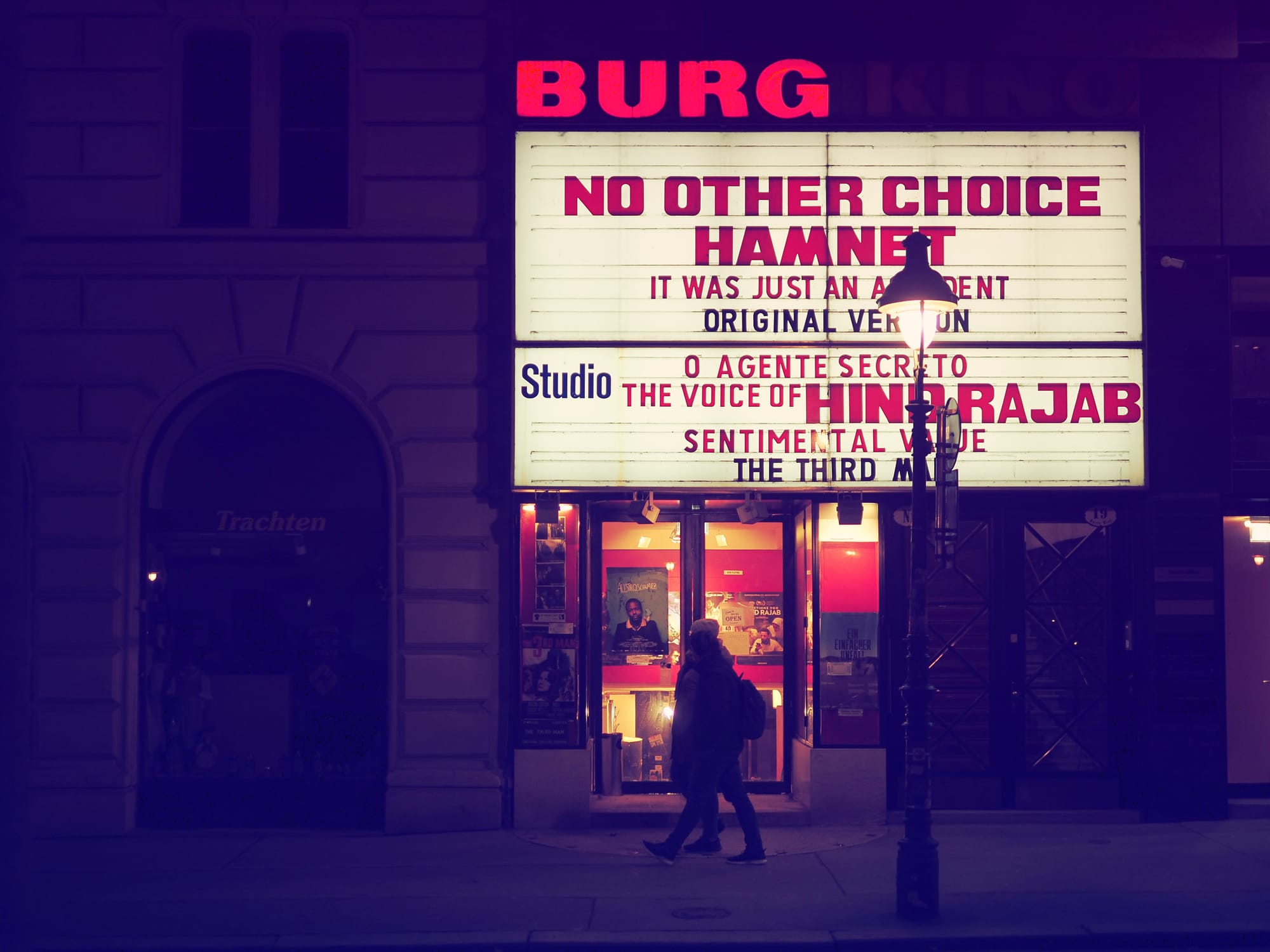
In darker areas, the filter introduces a subtle magenta color cast. This shift is most visible in deep shadows and low-light transitions, where neutral tones move slightly toward purple. It is not uniform and does not affect the entire image, but it becomes part of the overall rendering when light is rare.
The result is not nostalgia in a literal sense. It feels closer to memory than documentation. Scenes appear quieter than they actually were, and the city looks familiar, yet slightly distant. This behavior is exactly where the Vintage I ART filter makes sense, especially in night photography.
Not a filter for everything, but surprisingly capable
The Vintage I ART filter is not universal. It struggles with chaotic LED scenes and complex compositions. It is not made for technical sharpness or precision architecture.
But when the scene has a clear light source and enough space to breathe, the results can be unexpectedly strong. Another important aspect is immediacy. The images are finished when you press the shutter. That changes how you evaluate them and how quickly you move on to the next moment.
What matters when shooting with the Vintage I ART filter
This filter rewards restraint. Overexposure quickly breaks the mood. Keeping exposure slightly low helps preserve highlights and maintain depth.
Simple compositions work best. One dominant light source. Fewer elements. Willingness to let parts of the frame fall into darkness.
Most importantly, the Vintage I ART filter does not fix a weak scene. It amplifies intention. The more deliberate the framing, the better the filter responds.
Final thoughts
This walk reminded me why shooting straight out of the camera can be refreshing. The Vintage I ART filter did not make the images better in a technical sense. It made the experience calmer and more focused.
I would not use this filter all the time. But for quiet night walks and atmospheric city scenes, it earns its place in the camera, not as an effect, but as a creative choice.
I would love to hear your thoughts
Do you use ART filters or ignore them completely?
Have you tried the Vintage I ART filter at night?
Do you enjoy committing to a finished image in the camera?
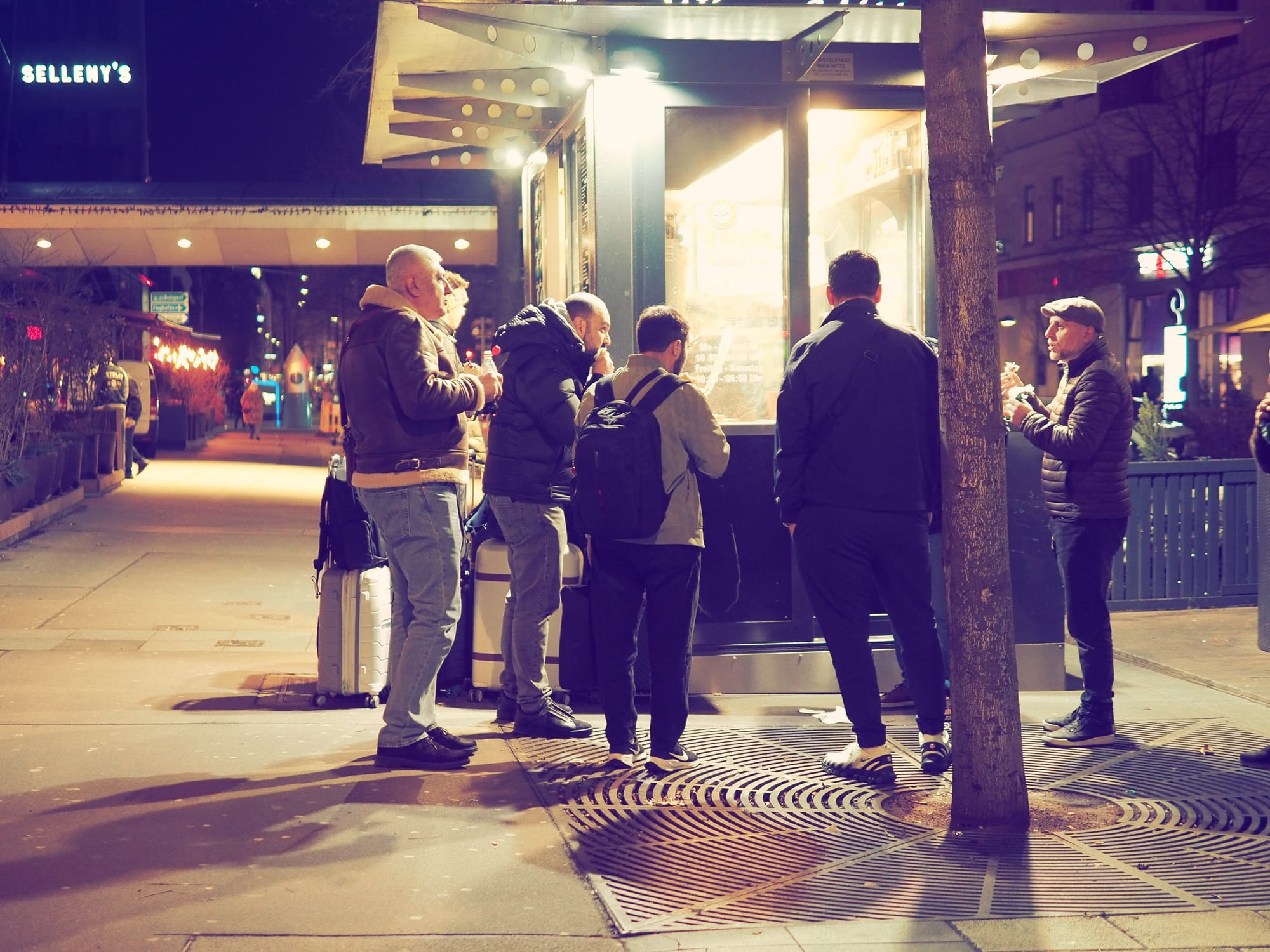
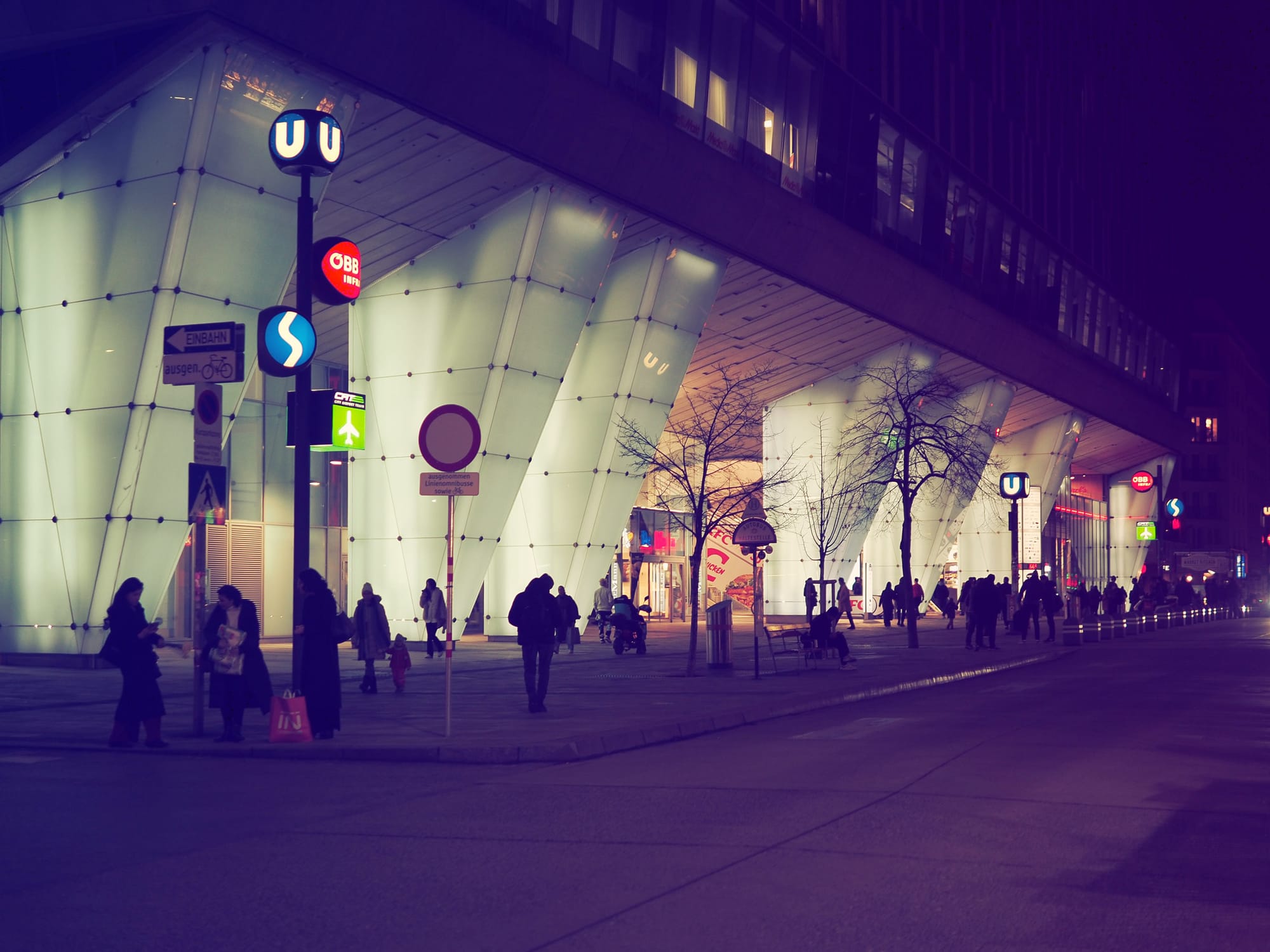
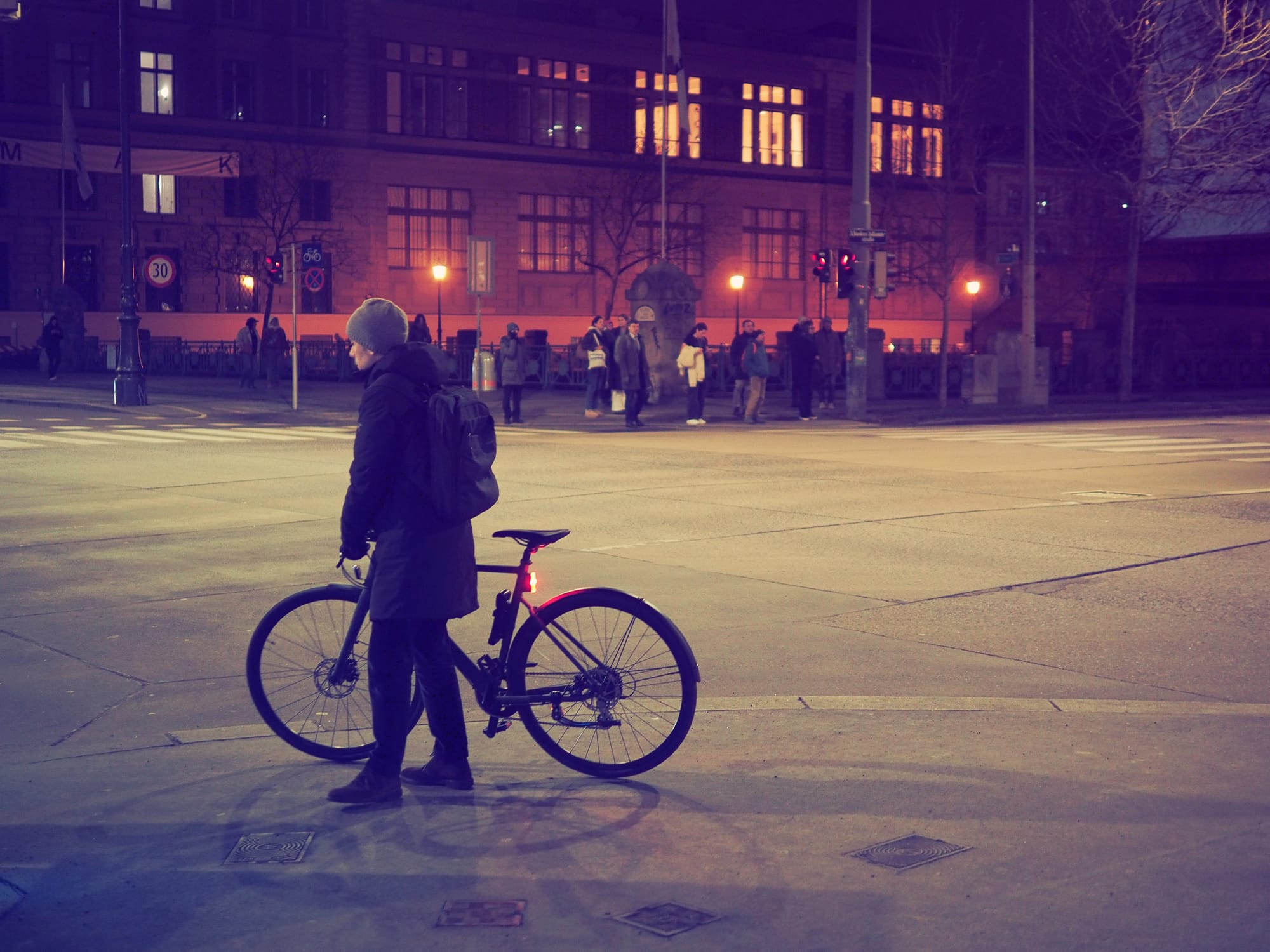
Feel free to share your experience in the comments or reach out directly. Below, you will find a small gallery selection that shows how the Vintage I ART filter behaves across different scenes.
Happy shooting!
Writing and sharing these articles takes time and care.
If you’d like to support this work, a small tip like a cup of tea is always appreciated.
Leave a small tip